
No pre-hire signal
New cooks won't sit through an assessment before joining, so onboarding can't screen for skill.

Cooks answer in Hindi or their local language, by voice, from a link inside the app they already use.
Short recipe videos followed by questions that confirm the cook actually understood them.
Operation managers see where every cook is strong and where they need coaching, scored across knowledge, understanding, and communication.
About the client
Tossit is an on-demand home cooking platform, available in HSR, Bangalore. Customers book a trained cook by the dish, from Hyderabadi biryani to sushi, with a cook arriving within 30 minutes. Every cook is background-verified and skill-verified; no subscription required.
Tossit's promise to customers is that the cook who shows up can actually make the dish booked. Verifying that at scale, for cooks with low digital literacy who speak vernacular languages, isn't something a manual or text-based process can handle. Gyde gave them a voice-first, local-language assessment inside the app cooks already use.
The problem statement
New cooks won't sit through an assessment before joining, so onboarding can't screen for skill.

Many cooks have limited reading fluency and speak a vernacular language, ruling out text-heavy quizzes.

Ops had no way to tell whether a cook who watched a training video actually absorbed it.

Without per-cook, per-dish scoring, ops couldn't see who needed coaching and on what.
How Gyde solved it
A button inside the Tossit Cook app opens a token-scoped assessment link in the system browser; identity carries over automatically, with no raw personal data in the URL.
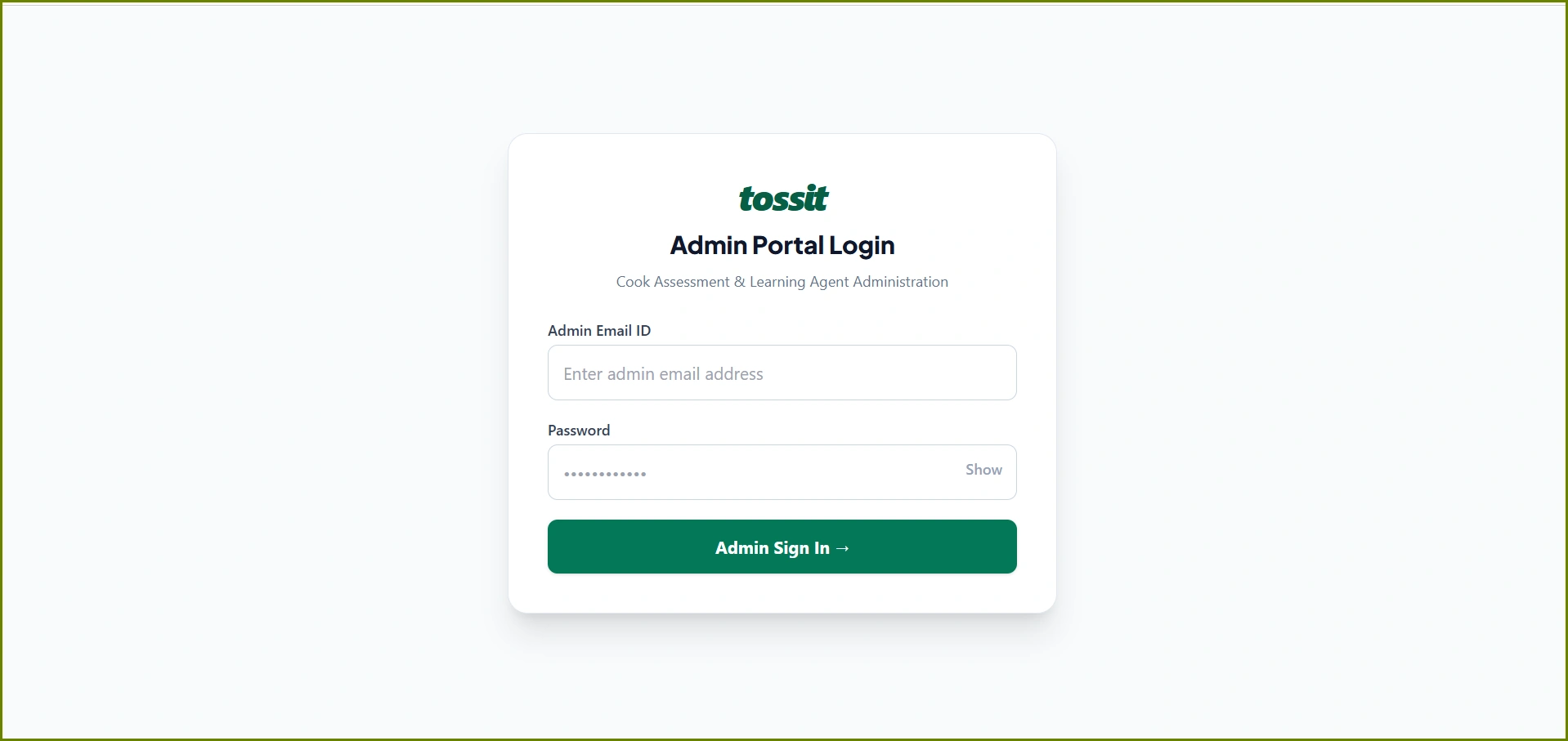
Admins upload SOPs, recipes, and short videos. Claude Sonnet 4.6 drafts questions, expected answers, and rubrics from video transcripts and visual keyframes; admins edit, reorder, and set language and thresholds before publishing.
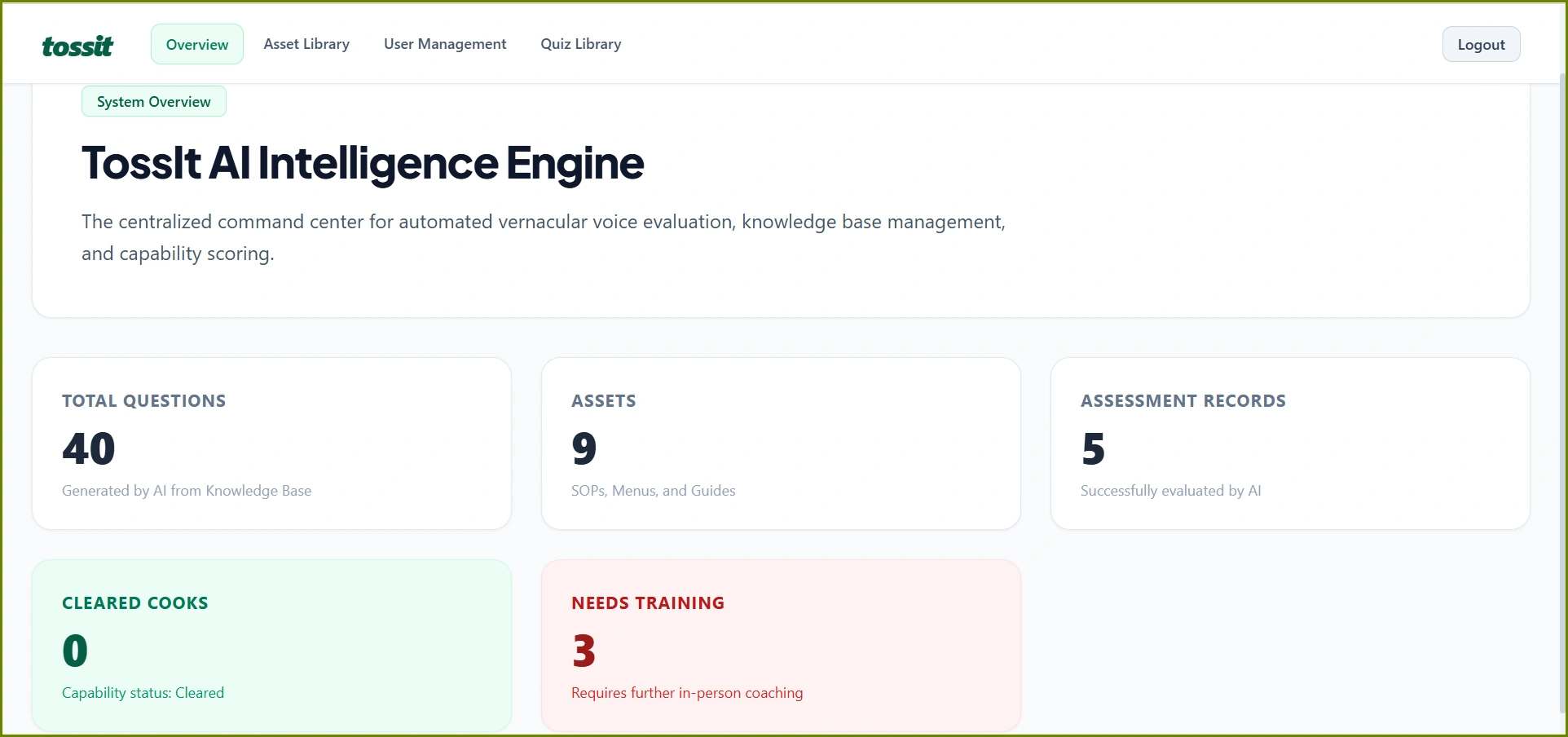
Cooks watch a short recipe video before answering, with watch tracking that tells ops "did not watch" apart from "watched but did not understand." A video module can run as unscored training or a scored assessment.
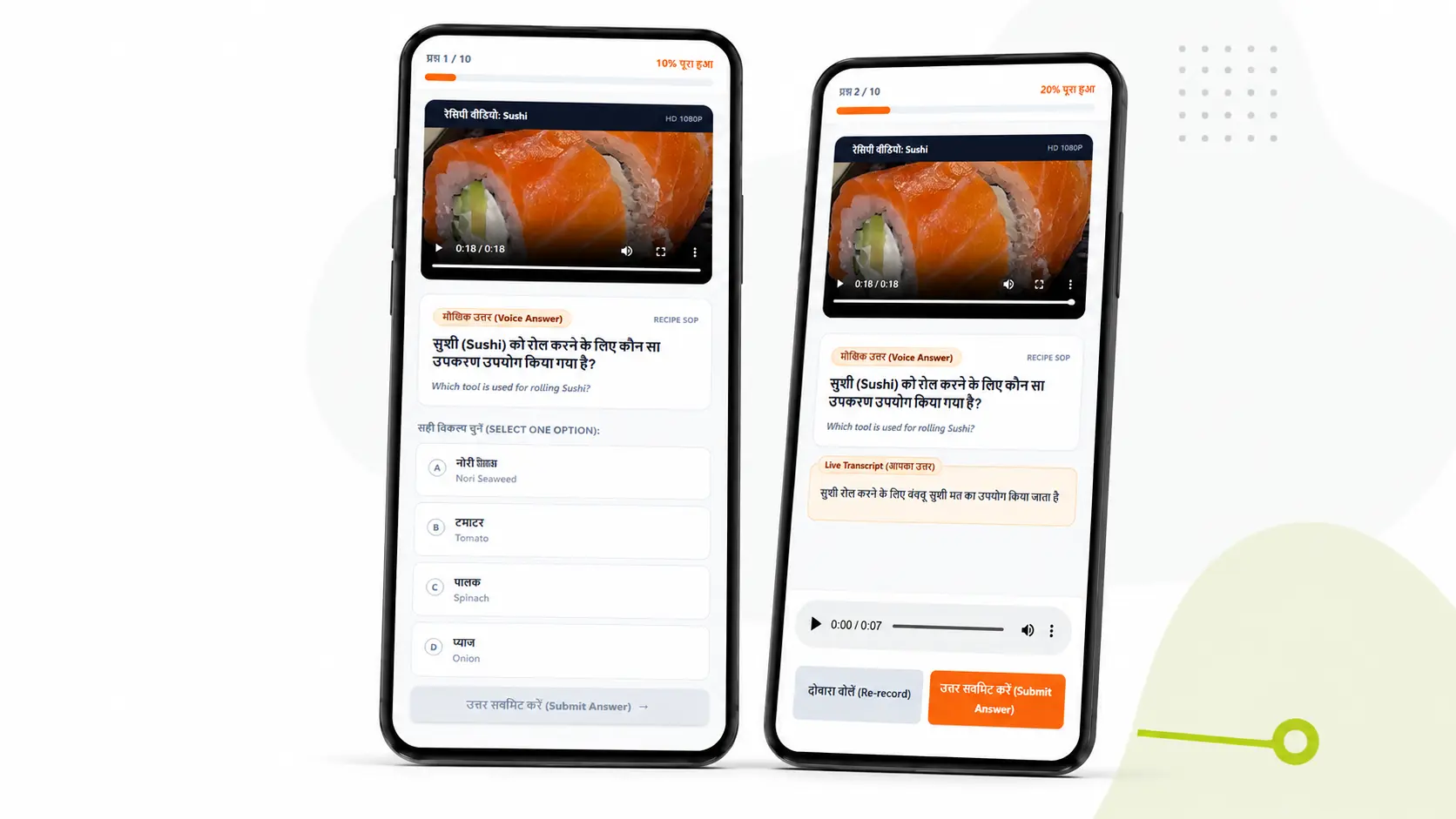
One question at a time with a progress indicator, resumable if interrupted, built for low-end phones and patchy networks. Cooks record, replay, and re-record voice answers in Hindi or their local language before submitting.
Claude Haiku 4.5 transcribes and scores each answer on knowledge, understanding, and communication. Low-confidence answers route to a human reviewer, who can override any score before it's final.
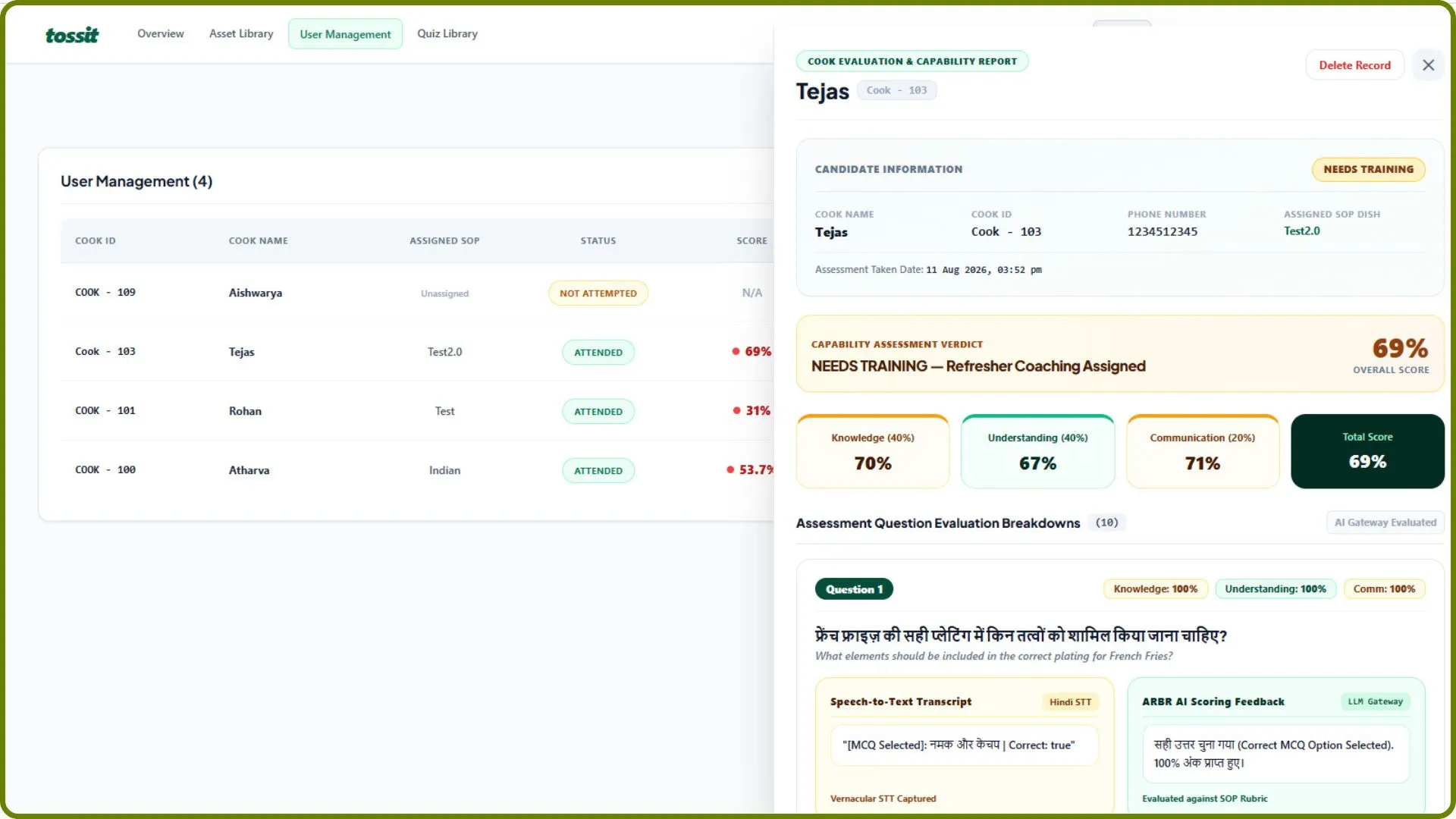
Admins assign assessments to individuals, groups, or a recurring schedule, with reminders sent by SMS, WhatsApp, or email. The capability dashboard shows per-cook strengths and gaps, and cooks can be reassessed as menus and standards change.
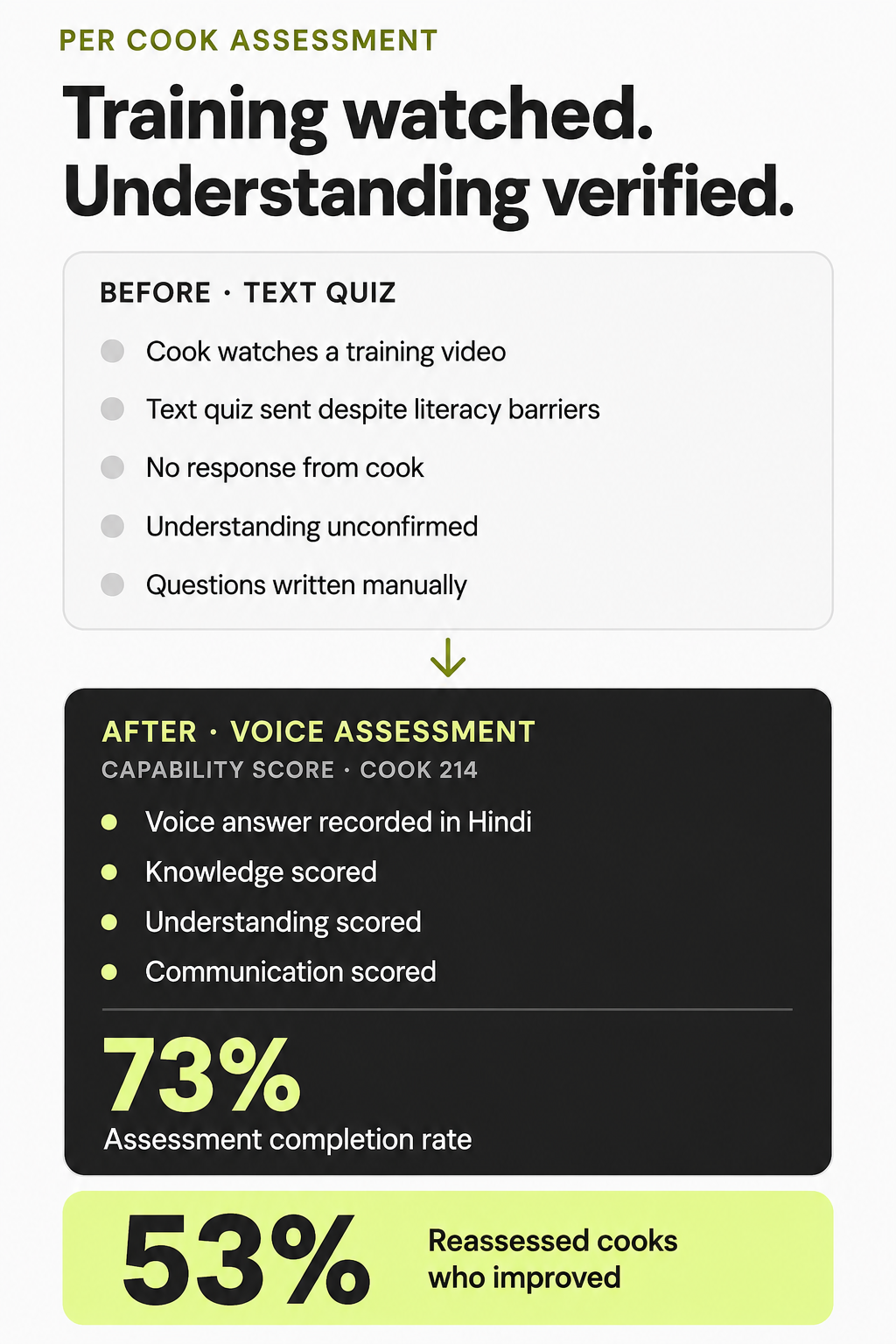
The outcome
Reading and language barriers
Voice assessments in a familiar language
73% assessment completion rate
Unclear progress after coaching
Improvement tracked through reassessment
53% of reassessed cooks improved
Questions prepared manually
AI-drafted questions reviewed by admins
46% less assessment preparation time
A pattern other platforms can borrow
The assessment runs by voice, in whatever language the worker actually speaks.
The system scores and flags answers; someone reviews anything that affects a worker's role before it counts.
Workers get reassessed as SOPs or standards change, which matters for any frontline job where "skilled" isn't a one-time label.
In their words
We needed a simpler way to assess our cooks’ skills — their understanding of recipes, ingredients, and different cooking techniques. We also wanted to know whether they actually understood the recipes after watching the training videos. Gyde helped us build that into our existing app, with cooks answering by voice in a language they’re comfortable with. Our ops team can now see the specific gaps and where someone needs more support. That gives us a much clearer way to plan training as we grow.

Explore more success stories
See how Gyde builds a capability-verification layer for workforces where training alone isn't proof of skill.