Public, low-risk
Public information with no sensitive data.
DecisionRoutes to the most economical approved model.
A 50-minute live demo of model configuration, policy and routing, followed by 10 minutes of Q&A.
Open-weight models give you more control over where and how a model runs. They also make you responsible for evaluation, configuration, security, monitoring and governance.
This session skips the question of whether open-weight models are "good" or "bad." Instead, we configure a small model catalogue live, define policies, send real AI requests and show you every routing decision as it happens.
How do we allow open-weight models into regulated workloads while keeping model, data, runtime and governance controls explicit?
Which model should be allowed to process which request, and under what conditions?
How do data classification and use-case risk decide where a request goes?
What does a privately hosted open-weight model look like when it handles a sensitive request?
What should the audit trail capture for every AI decision?
What changes between a demo setup and a production deployment?
Agenda
Each segment shows one part of the control flow, from registering a model to reading its audit trail.
The live requests
We send three deliberately different requests through the same platform so you can see what drives each routing decision.
Public information with no sensitive data.
DecisionRoutes to the most economical approved model.
Customer or employee PII, or a confidential document.
DecisionThe external model is blocked. The request routes to the private open-weight model.
Sensitive data plus high-risk decision support.
DecisionUses an approved model and/or requires human review.
The routing follows what the request contains, not a fixed model preference.
How we keep it objective
We won't claim open-weight models are inherently safer, cheaper, more accurate or more compliant. For every request, you'll see:
Who should attend
Especially relevant for BFSI and other regulated sectors.

Prasanna Vaidya
CEO & Co-founder, Gyde
Prasanna is building enterprise AI systems grounded in an organization's data, workflows, business rules and context. Today, Gyde works across AI applications, model routing, inference, evaluation and governance, with systems deployed in production across large enterprises and reaching 12M+ users every month.
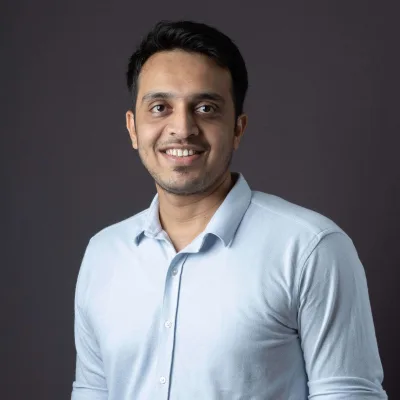
Shubham Deshmukh
Co-founder & CTO, Gyde
Shubham Deshmukh is the Co-founder & CTO at Gyde. With experience across AI, data, & product, he shares insights on AI governance in enterprise workflows & how to make complex systems easier to use.
Open-weight models give enterprises more control over where and how models run. The engineering challenge is turning that control into a repeatable operating model through model configuration, policy, routing, runtime controls and auditability.
Don't ask only"Can we run this model?"
Ask"Under what conditions should this model be allowed to process this request?"
50-minute live demo, followed by 10 minutes of Q&A.